
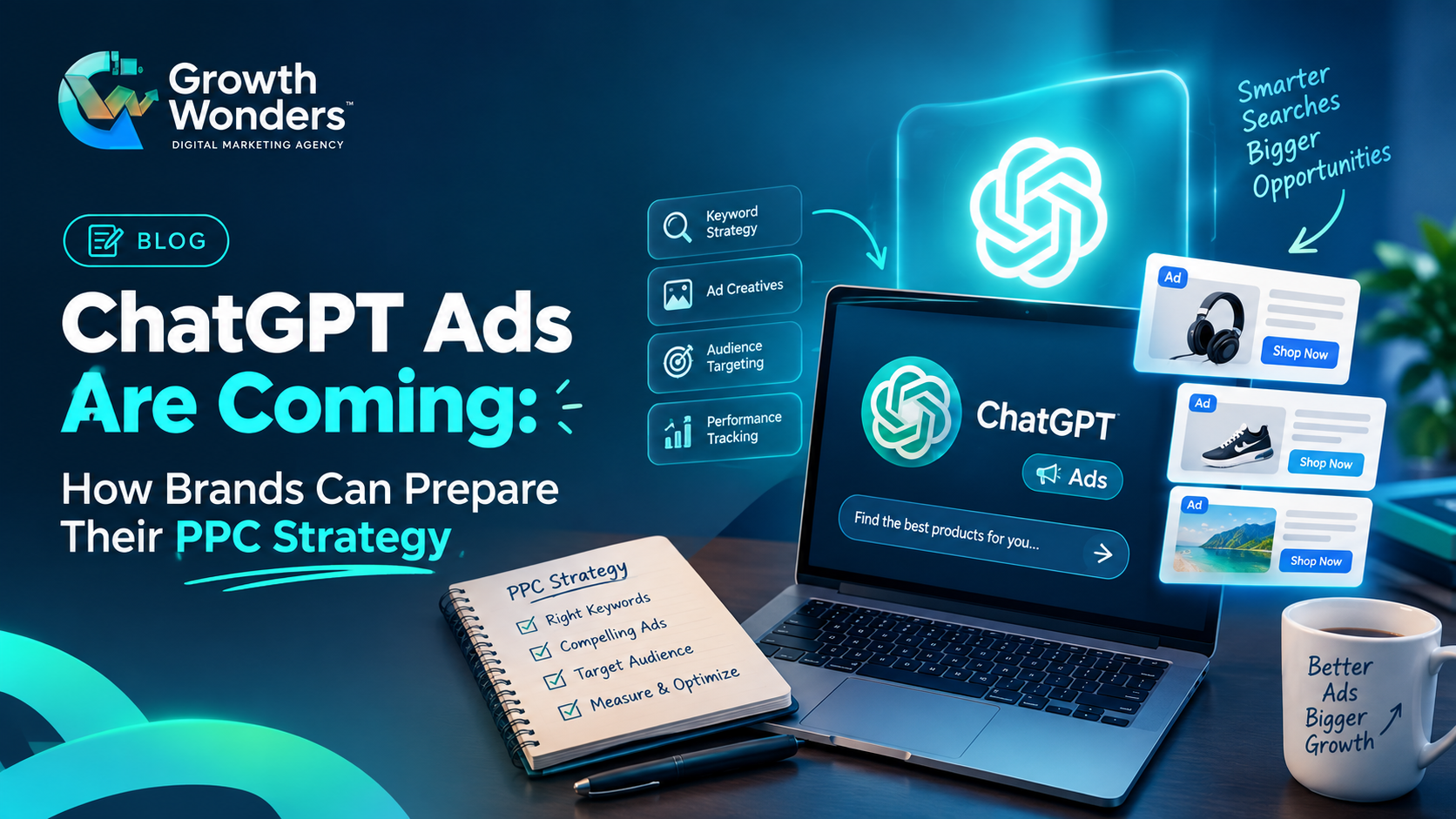
ChatGPT Ads Are Coming: How Brands Can Prepare Their PPC Strategy
Learn how openai chatgpt ads compare to platforms like Meta Ads. Discover campaign tips, targeting methods, and how to use the chatgpt ads manager.
Sep 18, 2026 • 6 min read
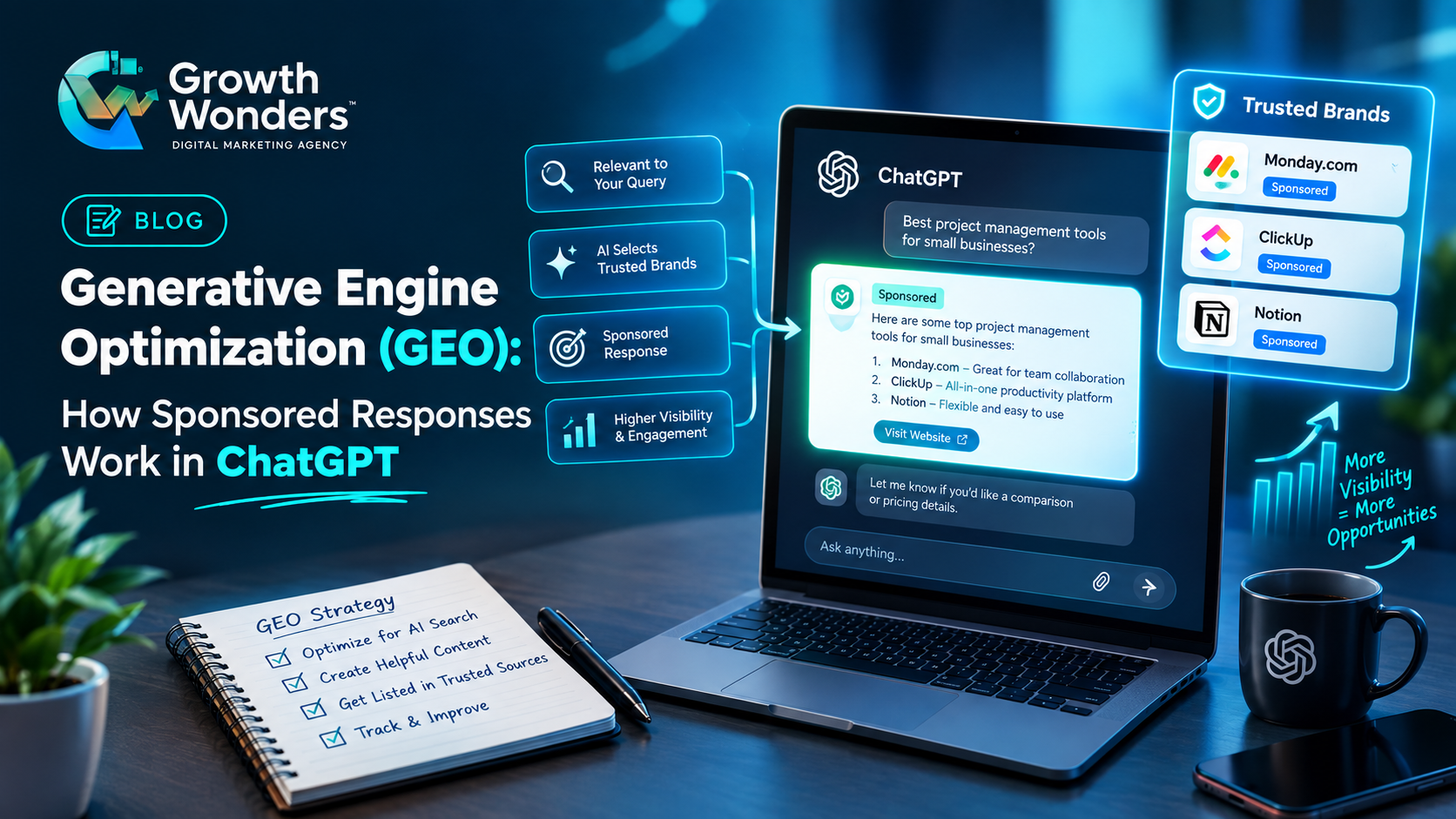
The way people search for answers on the internet has changed completely. For over two decades, finding information meant typing a query into a search engine, scanning a list of blue links, and clicking through to separate web pages. Today, millions of users bypass that entire process. Instead, they open an interactive chat interface, type a detailed question, and read a synthesized answer generated immediately.
This shift changes how brands appear online. When a user asks an AI assistant for product recommendations or service providers, the assistant constructs a direct response referencing specific sources. Getting your business mentioned or cited within these text replies requires a shift in mindset. This practice is known as Generative Engine Optimization (GEO).
At Growth Wonders, we track these structural changes closely. Understanding text retrieval, how paid placements fit into conversational answers, and what steps your team can take right now will help your brand maintain visibility as search behavior evolves.
Generative Engine Optimization (GEO) is the practice of structuring web content so that large language models can easily read, trust, and reference it within conversational answers. Unlike traditional search engine optimization, which focuses on earning a high position on a static results page, GEO focuses on becoming part of the final text output that a user reads.
Stop guessing. Start growing. Find out exactly what is holding your website back from ranking on Google in seconds.
To understand how GEO works, you have to look at how large language models handle queries. When a user asks ChatGPT a complex question, the model does not simply sort web pages by keywords. It scans indexed text, evaluates credibility, extracts relevant facts, and writes a conversational summary.
If your business information is clear, factual, and accessible, the model can include your brand directly in the text response. This process relies heavily on understanding how large language models select sources. Research into generative search behavior shows that models favor content that provides clear context, verifiable facts, and direct answers to specific questions rather than vague promotional language.
As conversational platforms grow, they introduce commercial layers. Platforms like OpenAI integrate sponsored responses alongside organic answers. This creates a dual environment where brands must consider both organic visibility and paid placement mechanics.
Organic citations happen when an AI assistant references your brand naturally because your website provides the most credible answer to a user's prompt. Paid placements, conversely, place sponsored cards or sponsored responses ChatGPT style directly into the conversation based on user intent and context.
Maintaining strong AI search visibility requires balancing these two elements. While a solid organic presence builds the foundational authority needed for citations, paid placements ensure your brand appears during high-intent commercial moments.
Get certified by industry experts. Join our comprehensive 360° training program and land your dream job with practical, hands-on experience.
Explore Courses
Developing a comprehensive generative engine optimization strategy requires shifting your focus from keyword volume to information architecture.
Traditional advertising relied on buying specific keywords. In conversational search, intent is fluid. A user might start a conversation by asking about general travel advice, then narrow down to specific hotel requirements, and finally ask for booking options.
When adapting your approach—especially when focusing on GEO for ChatGPT—you must ensure your web pages answer the specific follow-up questions users are likely to ask during a multi-turn conversation.
Preparing your digital strategy for generative search requires practical, disciplined execution. Here are the core actions your team should take.
To figure out how to optimize content for generative search, start by examining your formatting. AI crawlers read web pages to extract facts. If a page uses a clean hierarchical structure—such as clear question headings followed by direct answers—the text extraction process runs smoothly.
Scale your business with high-performance, IOS and Mobile Apps.
Start Your Project
Research comparing thousands of AI search responses found that pages containing original numbers, test results, or first-party statistics achieved significantly higher visibility in generative answers. Adding concrete data gives the system a specific fact to reference.
Generative models evaluate your brand's footprint across the broader web. Independent reviews, discussions on community platforms, and mentions on third-party sites contribute to entity authority. When an AI system cross-references multiple independent sources confirming your business expertise, your chances of getting cited by AI assistants increase dramatically.
To tie everything together, here is a quick checklist adapted from this ChatGPT search optimization guide to help your team prepare:
At Growth Wonders, we view generative engine optimization not as a replacement for traditional marketing fundamentals, but as a natural extension of them. Winning visibility in chat interfaces requires clear writing, technical discipline, and accurate data feeds. By focusing on what users and AI models value most—clarity, facts, and relevance—businesses can build sustainable digital authority.
As conversational search platforms change how people find products and services, adapting your digital strategy is essential. Generative Engine Optimization provides a clear path to earning visibility inside AI-generated answers. By aligning your content structure, opening access for crawlers, and maintaining a trusted web presence, your brand can secure a strong position in the future of search.
Learn how openai chatgpt ads compare to platforms like Meta Ads. Discover campaign tips, targeting methods, and how to use the chatgpt ads manager.

Wondering how to get more clients as a lawyer in India? Learn why traditional referrals aren't enough and how specialized law firm SEO can dominate
Running an ecommerce store in India? Learn how SEO services can replace expensive ads with sustainable organic traffic. Complete guide + free audit offer.
Our Digital Marketing Course in Muradnagar offers a comprehensive blend of theory and practice. Students can choose from offline, online,